How to Prevent Rust on Metal Parts
Tell Google we're a trusted resource.
The surest way to prevent rust on metal parts is to choose a material that doesn't rust, or to seal steel from moisture before it leaves the shop. Coatings you add later, care in storage, and good design all help, but they come second to that choice.
Laser cut and bent steel parts are especially exposed. Cut edges are bare metal, and a bracket can show surface rust within days in a humid garage. Rust ruins the finish, hurts the fit of tight features, and over time eats into strength.
This guide covers what causes rust, which metals resist it, and how to protect each material using the processes Fabworks offers: material selection, powder coating, galvanized steel, and design choices you make in CAD before you upload a file.
What Causes Rust?
Rust is iron oxide. It forms when iron reacts with oxygen and water, so any metal that contains iron can rust, including carbon steel and, under the wrong conditions, stainless steel. Salt, acids, and road chemicals speed the reaction up, which is why parts near the coast or on vehicles rust faster.
Aluminum, zinc, and copper also oxidize, but their oxides form a thin, tight layer that protects the metal underneath. For more on how steel behaves bare, see Mild Steel vs Stainless Steel. Iron oxide is flaky and porous, so it lets moisture through and the rust keeps spreading.
Types of Rust
| Type | Where you see it | What it means |
|---|---|---|
| Red rust | Bare or scratched carbon steel | The common orange-brown flaky rust. It keeps spreading as long as moisture is present. |
| Black rust | A thin dark film, often under red rust or in low-oxygen areas | A more stable iron oxide. It's still corrosion, but it spreads more slowly. |
| White rust | Galvanized steel | Zinc corrosion, a chalky white powder. It forms when galvanized parts stay wet without airflow, such as stacked tight in storage. |
| Flash rust | Freshly cut or cleaned steel | A light orange haze that appears within hours on bare steel in humid air. |
Stages of Rust
- Surface staining: light discoloration or flash rust. Wipe it off, then seal the part.
- Scaling and flaking: rust lifts off in flakes and leaves pitting. Sand or wire brush back to clean metal, then recoat.
- Deep pitting and section loss: the metal is thinner and weaker than designed. Replace the part, especially if it carries load.
Metals That Don't Rust (and Ones That Do)
Of the sheet metals Fabworks stocks, aluminum doesn't rust, and 304 stainless and G90 galvanized steel resist it well. Bare 1008 and A36 steel rust quickly unless they're coated. In a Fabworks side-by-side test, the same part in bare steel rusted heavily after 30 days, aluminum changed slightly, and 304 stainless still looked new.
| Material | Does it rust? | How it protects itself | Best for |
|---|---|---|---|
| 304-2B stainless steel | Resists rust; can stain in salt or chloride exposure | Chromium forms a self-healing oxide layer | Outdoor, food, marine-adjacent, bare metal look |
| 5052 and 6061 aluminum | No (it oxidizes, but doesn't rust) | A thin oxide layer seals the surface | Lightweight parts, outdoor use |
| G90 galvanized steel | Resists rust; can form white rust | Zinc coating (0.90 oz/sq ft, both sides combined) that corrodes first | Outdoor brackets, enclosures, HVAC, agriculture |
| 1008 cold-rolled steel | Yes, quickly when bare | None | Indoor parts, or any part that will be powder coated |
| A36 HRPO steel | Yes; a light mill oil film slows it at first | Temporary mill oil only | Thick structural parts that will be coated |
Does Stainless Steel Rust?
Stainless steel can rust, but it takes harsh conditions. 304 stainless contains chromium, which forms a thin oxide layer that re-forms when scratched. Salt spray, pool chemicals, or contamination from carbon steel tools can break that layer down and leave brown "tea staining" on the surface. Welding heat can do the same: clean the heat tint off stainless welds to restore full corrosion resistance. For most indoor and outdoor parts, 304-2B stays rust-free with no coating.
Does Aluminum Rust?
Aluminum doesn't rust, because rust is iron oxide and aluminum contains no iron. It does oxidize, forming a dull gray layer that seals the surface and slows further corrosion. Salt water can still pit it over time. That makes 5052-H32 and 6061-T6 good rust-proof choices when a part needs to be light and corrosion resistant. 7075-T6 is stronger but less corrosion resistant, so coat it for outdoor use. Steel vs Aluminum compares the two in more detail.
Does Galvanized Steel Rust?
Galvanized steel resists rust for years, but it can rust once the zinc coating is used up or damaged over a large area. The zinc is sacrificial: at a scratch or a laser cut edge, the surrounding zinc corrodes first and protects the exposed steel. In wet storage, galvanized parts can grow white rust, which is the zinc corroding rather than the steel.
What Is White Rust?
White rust is the chalky white powder that forms on galvanized steel when it stays wet without airflow. It's zinc corrosion, not steel rust, and a light layer is mostly cosmetic. Heavy white rust uses up the zinc, which leaves the steel underneath unprotected. It's most common on new galvanized parts stacked tightly in damp storage, so keep G90 parts dry and spaced apart.
4 Ways to Prevent Rust on Metal Parts
The first three methods happen at Fabworks before your parts ship. The fourth is a step you take after delivery, along with the storage habits covered further down.
1. Start With a Rust-Resistant Material
Rust you never have to fight is the cheapest rust prevention there is. If a part will live outdoors or near water and you want a bare metal look, order it in 304-2B stainless steel. If weight matters too, aluminum gives you corrosion resistance at about a third of the weight of steel. You can compare both against steel on price in seconds by changing the material on your instant quote.
2. Order G90 Galvanized Steel
Galvanized steel is a material choice, not a finish. The zinc coating is already on the sheet before it's cut, so there's no extra finishing step or added lead time. It's a cost-effective way to rust proof steel for outdoor brackets, enclosures, and utility parts. Keep these limits in mind:
- Fabworks doesn't weld galvanized steel, because the zinc burns off and contaminates the weld. See the welding design guide.
- G90 can be bent, so formed brackets and enclosures are fine.
3. Powder Coat Your Parts
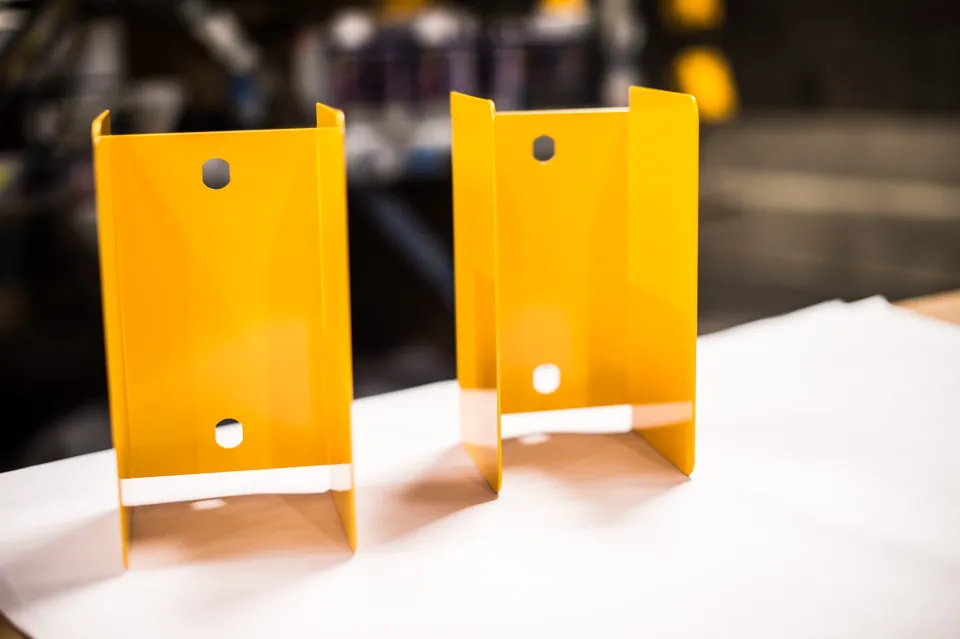
Powder coating is the most versatile way to protect steel from rust. A dry powder is sprayed on, then melted and cured into a hard layer that seals the metal from moisture and resists chipping and scratches better than paint. Fabworks can powder coat steel, stainless, and aluminum, and you add it on the same quote as cutting and bending.
Design for these details before you upload:
- Thickness: coating adds 0.002" to 0.004" to each surface, so allow for it in slots, tabs, and press-fit holes. See the powder coating guidelines.
- Hanging hole: every part needs a small hole or cutout to hang it from during coating. If your part has none, we'll reach out to ask where to add one.
- Masking: if threads, holes, or contact surfaces need to stay bare, contact us before you order.
- Welds: for welded parts, grinding the welds smooth before coating gives visible corners a cleaner finish.
- Lead time: powder coating typically adds 5 to 7 business days. Checkout shows the exact ship date.
4. Coat or Oil Bare Parts After Delivery
If you order bare steel to finish yourself, protect it as soon as it arrives. For storage or shipping, wipe on a light oil or a spray rust inhibitor to keep moisture off. For a permanent finish, clean and degrease the part, prime it, then paint it. Fabworks doesn't paint, phosphate, or blue parts, so send those jobs to a finishing shop. Anodizing for aluminum is coming soon and available on request, so contact us if you need it.
Design Tips That Prevent Rust
Rust starts where water sits, so the cheapest fix is often in your CAD model. Check these before you upload a STEP file:
- Add drain holes. Channels, trays, and boxed sections that face up collect water. A small hole at the low point lets it out.
- Vent enclosures. Sealed boxes trap condensation. Add vent slots so moisture can escape.
- Avoid tight crevices. Overlapping flanges and narrow gaps hold water and are hard to coat. Leave room for powder to reach every surface.
- Weld steel, not galvanized. If a part needs welding and rust protection, weld steel and powder coat it, or weld 304 stainless or aluminum and leave it bare. Fabworks welds bent parts up to 0.250" thick; see the welding guidelines.
- Avoid mixing metals at wet joints. Bare steel fasteners in stainless parts rust quickly, and aluminum corrodes around steel or stainless fasteners when wet. Use stainless or zinc-plated fasteners, and isolate dissimilar metals with washers or sealant.
- Size up thickness in harsh environments. Thicker material takes longer for corrosion to weaken, which buys time in salt or chemical exposure.
- Allow for coating thickness. Leave 0.002" to 0.004" per surface on mating features of powder coated parts, and more for snap fits and slots.
Storing, Handling, and Maintaining Your Parts
Inspect parts when they arrive, then keep bare steel dry from day one.
- Store dry. Keep parts indoors in low humidity, off concrete floors. Add desiccant packs to bins and sealed containers.
- Give galvanized parts airflow. Don't store G90 parts wet or stacked tight against each other. That's what causes white rust.
- Wear gloves. Skin oils and salt leave fingerprints that rust on bare steel.
- Keep tools separate. Grinding or wire brushing steel near stainless parts can embed iron particles that rust on the stainless surface.
- Clean coated parts gently. Wash powder coated parts with mild soap and water. Abrasive cleaners and harsh chemicals wear the coating down.
- Touch up damage fast. A chip in a powder coat exposes the steel. Clean the spot and touch it up before rust creeps under the coating.
How to Remove Rust From Metal Parts
Match the method to how far the rust has gone:
- Flash rust or light staining: wipe with a fine abrasive pad or a rust remover, then oil or coat the part.
- Surface rust: sand with 120 to 220 grit paper or an orbital sander until you reach bright metal.
- Heavy scale: use a wire brush or wire wheel, then sand smooth. Check thickness and fit afterward, because rust removal takes material with it.
After cleaning, protect the part right away. Bare steel can flash rust again within hours.
Which Material and Finish Should You Choose?
Start with where the part will live, then pick the lowest-cost option that holds up there.
| Environment | Recommended option | Why |
|---|---|---|
| Dry indoor, hidden | Bare 1008 steel | Lowest cost; rust risk is low if stored dry |
| Indoor, visible or handled | Powder coated steel | Seals the steel and adds color |
| Outdoor, no welding, color not needed | G90 galvanized steel | Zinc protection with no finishing step |
| Outdoor, welded | Powder coated steel, or bare 304 stainless | Galvanized can't be welded at Fabworks |
| Outdoor, bare metal look | 304-2B stainless steel | Rust resistant with no coating |
| Lightweight, outdoor | 5052 or 6061 aluminum | Doesn't rust, about 1/3 the weight of steel |
| Coastal, salt, or chemicals | 304 stainless or aluminum, powder coated | Two layers of protection; bare 304 can tea-stain in salt air |
Galvanized vs Stainless Steel
Galvanized steel costs less than stainless and holds up well outdoors, but it relies on a zinc coating that wears over time, and Fabworks can't weld it. Stainless costs more but is corrosion resistant all the way through, can be welded (clean the heat tint afterward), and keeps its bare metal look. Choose galvanized for fastened outdoor parts on a budget, and stainless when the part must be welded, look clean, or survive harsh exposure.
Frequently Asked Questions
How do you keep steel from rusting without paint? Order it in G90 galvanized steel, powder coat it, or oil it and store it dry. If you can switch materials, 304 stainless or aluminum needs no coating at all.
Does powder coated steel rust? Not while the coating is intact. Rust can start where the coating is chipped or scratched, so touch up damage quickly and clean with mild soap and water.
Can you powder coat galvanized steel? Not at Fabworks. Galvanized parts ship bare. If you need both color and strong corrosion resistance, powder coat stainless steel or aluminum instead.
How fast does bare steel rust? In humid or salty air, flash rust can show on bare steel within hours. In a dry, climate-controlled room it can take weeks. Protect bare steel as soon as it arrives.
Do laser cut edges rust faster? Cut edges are bare metal, so on steel they rust like any other uncoated surface. On thin galvanized sheet, the zinc around a cut edge corrodes first and protects the exposed steel, though thicker edges can show light rust. Powder coating covers the edges along with the faces, and deburred edges hold the coating better than sharp ones.
What is the most rust-resistant metal Fabworks offers? 304-2B stainless steel, followed closely by 5052 and 6061 aluminum. Both resist corrosion without a coating.
Get Rust-Resistant Parts From Fabworks
Preventing rust comes down to three choices: the right material, the right finish, and a design that doesn't trap water. Fabworks stocks 304-2B stainless, 5052 and 6061 aluminum, and G90 galvanized steel, and powder coats steel, stainless, and aluminum, with no order minimums.
Upload your STEP file for an instant quote, then switch materials and add powder coating to compare price and lead time side by side. Not sure which option fits your part? Email support@fabworks.com and we'll help you choose.
Sheet Metal Fasteners: How to Choose the Right Hardware
How to choose sheet metal fasteners for a sheet or tube part. Covers PEM nuts, flush nuts, studs, standoffs, blind standoffs, and rivnuts, plus how material, thickness, and access narrow the choice.
Design Sheet Metal Parts with AI: A Full Workflow, From Idea to Order
How to use an AI agent for the whole design process, from a description or a photo of an existing part to a CAD model that has passed a manufacturability check and is ready to order.
Order Sheet Metal Parts
Upload a 2D DXF or 3D STEP file for an instant laser cutting quote. Quote in seconds, order in minutes, receive parts in days.
or drag and drop
STEP / DXF up to 24MB
Your files are safe, secure, and retain all intellectual rights.