Powder Coating vs Paint for Metal Parts
Tell Google we're a trusted resource.
For most metal parts, powder coating is the better choice. It goes on thicker than paint, cures into a hard cross-linked film that resists chips, scratches, and corrosion better than conventional paint, and gives off almost no VOCs. Paint is the better choice when the part can't go in a curing oven, needs to be finished or touched up in the field, or needs a thinner film or a custom color in a very small batch.
Powder Coating vs Paint at a Glance
| Powder coating | Liquid paint | |
|---|---|---|
| How it's applied | Dry powder sprayed electrostatically, then oven cured | Sprayed, brushed, or rolled, then air dried or baked |
| Typical thickness | About 0.002"-0.004" (2-4 mils) in one coat | About 0.001"-0.002" (1-2 mils) per coat |
| Chip and scratch resistance | High | Lower, depends heavily on the paint system |
| VOCs | Essentially none, no solvent | Solvent-based paints release VOCs |
| Touch-up | Difficult, usually means stripping and recoating | Easy |
| Where it's done | A shop with a booth and curing oven | Anywhere, including in the field |
| Best for | Metal parts that need a durable, even finish | Heat-sensitive parts, field work, quick repairs |
How Powder Coating Works
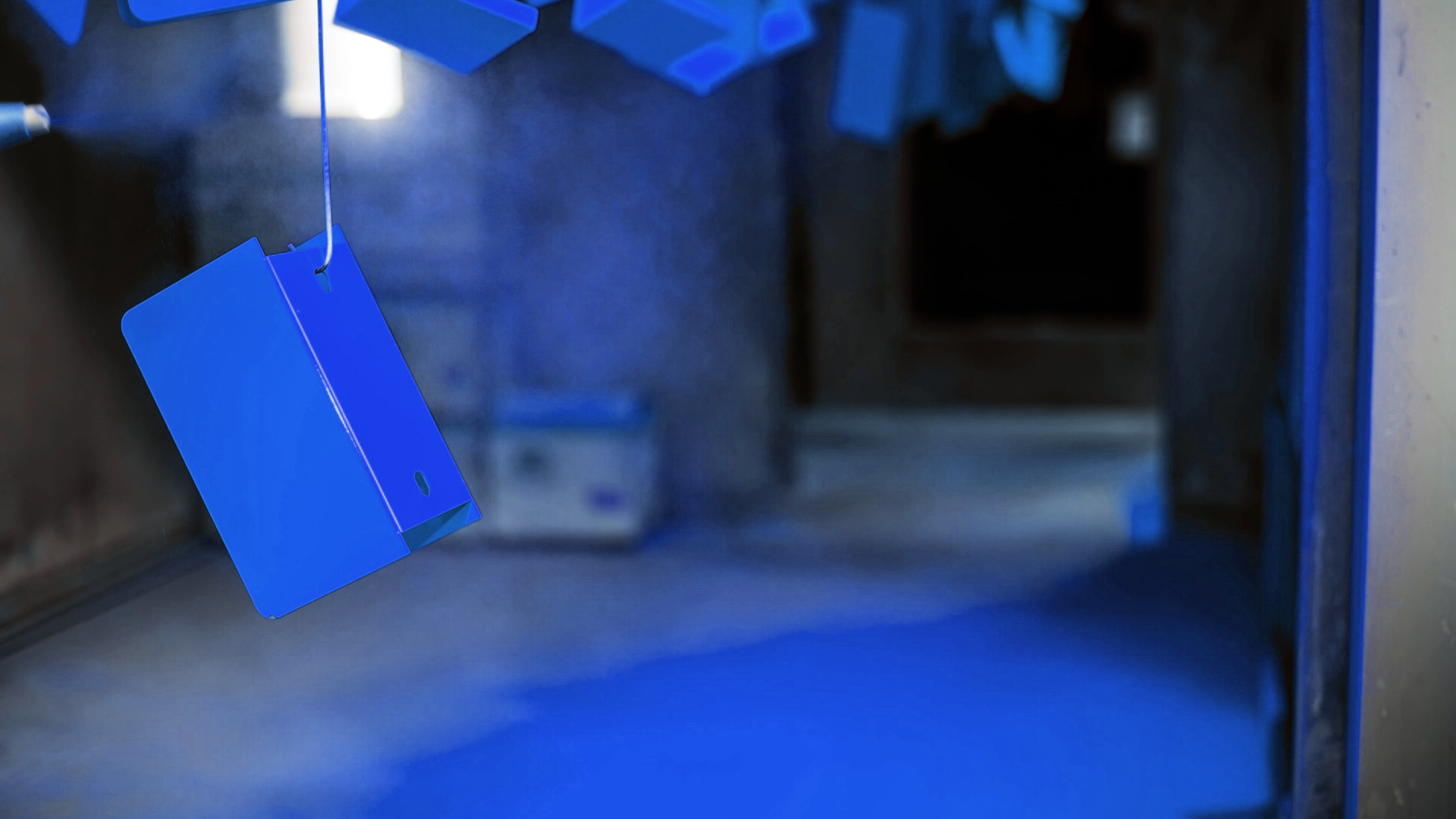
Powder coating is a finish made from a dry powder of resin and pigment. The part is cleaned and pretreated, then the powder is sprayed on with an electrostatic gun. The charged powder clings to the grounded metal part, which helps it wrap around edges evenly. The part then goes into an oven, where the powder melts, flows into a smooth film, and cures into a hard, cross-linked coating.
Because there's no solvent, almost nothing evaporates during curing, and oversprayed powder can often be collected and reused. That's the main reason powder coating has far lower VOC emissions than solvent-based paint.
Why Powder Coating Holds Up Better
- It's thicker. A single powder coat is usually about twice as thick as one coat of paint, so it takes more wear before metal shows through.
- It's cured, not just dried. The cross-linked film is harder and more chemical-resistant than most air-dry paints.
- It's even. The electrostatic charge pulls powder onto outside edges that liquid paint tends to run off of, though deep inside corners can be harder to coat.
Paint still has real advantages. It doesn't need an oven, so it works on heat-sensitive parts and on parts too large for a curing oven. It can be applied anywhere, it's easy to touch up a scratch, and its thinner film is easier on tight fits.
How Long Does Powder Coating Last?
Indoors, a well-applied powder coat usually lasts the life of the part. Outdoors, sunlight is what wears it down. Over years of UV exposure, the surface slowly loses gloss and color. How fast that happens depends on:
- The powder chemistry. Polyester and other outdoor-rated powders resist UV well. Epoxy powders are tough but chalk and fade quickly in sunlight, so they're best indoors.
- Pretreatment. Clean, properly prepared metal is what keeps the coating bonded and stops corrosion from creeping under it.
- Film thickness and coverage. Thin spots and uncoated edges are where failures start.
- Damage and environment. Once a coat is chipped through on steel, rust can spread under it, especially in salt or constant moisture.
Clean powder-coated parts with mild soap and water. Avoid abrasive cleaners and harsh solvents, which dull the surface.
Designing Parts for Powder Coating
- Allow for thickness. Powder coating adds 0.002"-0.004" to each coated surface. That's enough to tighten slip fits, shrink holes, and change mating dimensions, so tolerance holes and slots accordingly.
- Plan for masking. Threads, contact surfaces, and grounding points may need to be masked. If you need holes or surfaces masked, ask before you order.
- Add a hanging point. Parts hang during coating, so each part needs a small hole or cutout to hang from.
- Grind visible welds. On welded parts, grinding the welds smooth before coating gives visible corners a cleaner finish. See grinding welds smooth.
The powder coating guidelines cover these details and list every finish we offer.
Powder Coating at Fabworks
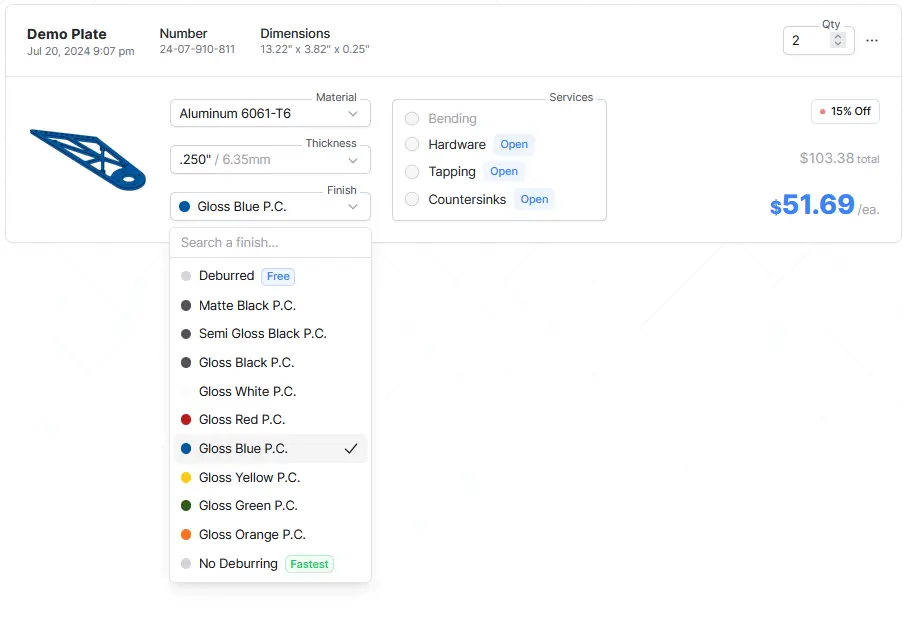
Fabworks offers powder coating as an add-on to laser cut, bent, and tube parts, in 14 finishes. These include gloss, semi-gloss, matte, and textured options in black, white, gray, red, orange, yellow, green, blue, and sand, plus a high-temperature black. Coating is priced in the same instant quote as cutting and bending, and powder coated parts typically ship in 5-7 business days.
If you're coating parts mainly for corrosion protection, compare the cost of starting with a corrosion-resistant material. Our guide to choosing the right material covers when to powder coat and when to order galvanized steel instead, and how to prevent rust on laser cut parts covers the other options.
Order Sheet Metal Parts
Upload a 2D DXF or 3D STEP file for an instant laser cutting quote. Quote in seconds, order in minutes, receive parts in days.
or drag and drop
STEP / DXF up to 24MB
Your files are safe, secure, and retain all intellectual rights.